
Sanary - Safe Harbour
When a Village Runs Like a Company
It takes a village to raise a child, they say. - What does it take to raise a village?
More precisely:
Let’s take a look at the comparable mission of taking a village from vision to sustainable success, or a company.
Both need a clear vision, strong leadership, and money, obviously among many other things.
Healthy companies are built to continue existing, even flourishing, after the founders have gone. So are cities.
A founder’s role is to ignite the concept and take it from brain to terrain, creating structure and stability. They are the most relevant figure in their setting until everything runs steadily and managers capable of taking over have been found. Founders then usually focus on high-impact decisions, strategic direction, long-term vision, and preserving the company’s culture.
There is a difference between those who build and those who operate what was built. Both are necessary. They are not the same.
Both projects depend on a variety of heavy external factors, but won’t survive year three without great leadership. By great leadership, I mean clarity in action (what else!), a team that works like a timeless watch, and that bizarre mix of discipline and highly sensitive creative problem-solving required to raise capital and circumvent obstacles. Also, there is a lot of momentum around personality: often a combination of vision and megalothymia (n) - from Greek megas (great) + thymos (spirit, soul). The compulsion to be recognized not merely as successful, but as the defining force behind something. In founders and city-transforming mayors alike, it manifests as tireless drive and a low tolerance for shared credit - as demanding on those around them as it is generative for the organizations and cities they leave behind.
As for a Village
One thing the recent Sanary elections made me think about: people often underestimate how much a place can reflect the personality of one persistent leader over time.
Think what you wish about Ferdinand Bernard: Sanary did not become what it is accidentally. One can disagree with methods, style, ego, politics, or character. That is another discussion.
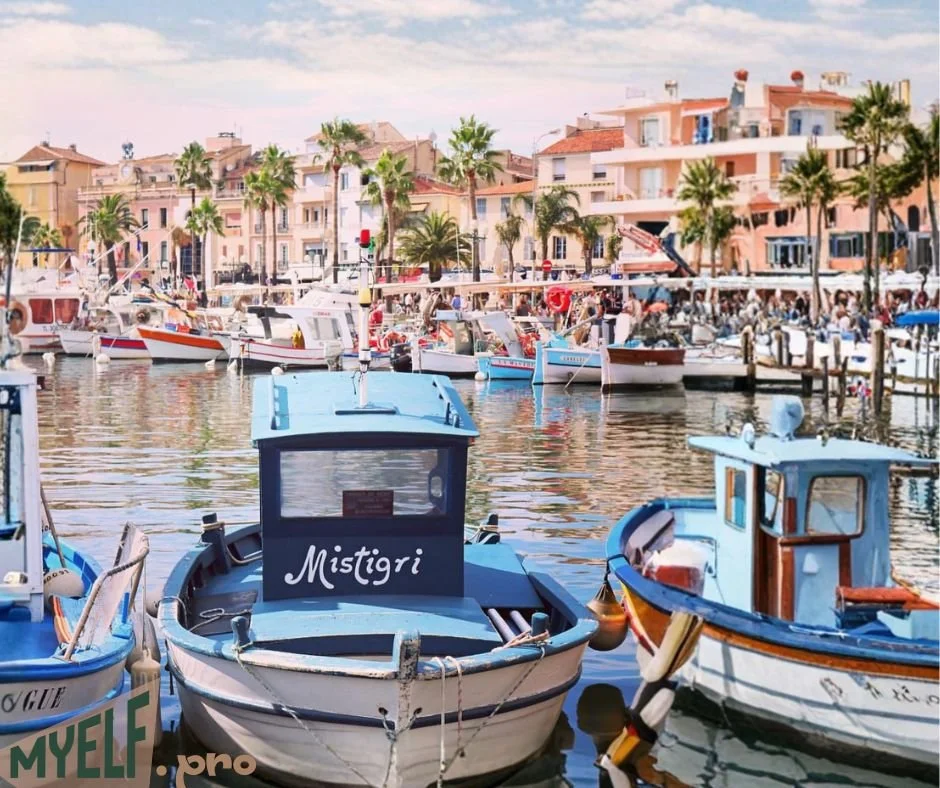
I am talking about results. And the undeniable result lies right in front of our eyes: a small coastal town that became internationally desirable, economically stable, safe, healthy, lively all year round, recognizable, sustainable, gratefully linked to its past, openly embracing modern life, coherent, and deeply pleasant to live in, whatever one’s age may be.
That takes much more than marketing. It takes vision and years of consistently good decisions. Taste. Standards. Pressure tolerance. Operational discipline. And certainly a personality strong enough to resist constant noise.
Ma photo modifée parl’IA
What struck me most during the March 2026 elections was how little the team replacing him spoke about the actual achievements visible in front of everyone’s eyes. As if modern communication had become disconnected from tangible reality. Thirty-five years of successful projects, and not one was used as an argument in their own favor. Nobody here actually quite understands why.
What happened? The interim successor stood for continuity but did not perform in the same way. Then the new candidate seemed to lack everything important needed to fill the void the former mayor had suddenly left behind. Now (May 2026), ironically, both the departure and the arrival were shaped by what might be called inconsistency; in both cases, arguably ideological. The difference, perhaps, is that one of them never stopped being the same person throughout.
Leadership or persona is always easy to criticize, but far harder to evaluate honestly through outcomes accumulated over decades. Legacy is its own argument.
However, once the long-time mayor had left, his team was literally still standing : standing still in the middle of one of Bernard’s portside projects, about to transform ordinary roads in the hypercenter into enjoyable flower-planted walkways. Nobody said a thing. Not one word. How is that even possible?
Can highly coherent systems really emerge - and exist - without highly coherent people behind them?
Many organizations collapse at the first soft breeze because nobody is truly carrying a vision strongly enough for long enough. Here, the system continued working for years after ignition. And then came what felt like a void. Emptiness. Loneliness.
Real Leadership
In 1989, when a dynamic middle-aged Ferdinand Bernard rose to power, Sanary was already a small village rising toward wealth.
Just like running a company, many important decisions must be made early and then defended over time. The modern upscale Sanary people recognize today is undoubtedly the result of decisions he made, and I believe, though I may be entirely wrong, that he made quite a number of those decisions alone. After evaluating other opinions, certainly, but ultimately doing what he believed was best for the village’s interests.
He reinforced the image of an authentic fishing harbor, Provençal art de vivre, and quality tourism instead of mass tourism, while avoiding Sanary becoming a nightclub city, a billionaire spot, a dense concrete resort, or a hyper-commercial coastline strip.
While Sanary was already in a good place, it is fair to say his decisions contributed to making it expensive. His strict urban planning made a huge difference: limiting high-rise construction, aggressive overdevelopment, and large disruptive projects, while preserving property values, visual coherence, and the village atmosphere.
Through what one might call controlled embellishment, he reinforced clean facades, flowered public spaces, picturesque port aesthetics, and a coherent Provençal visual identity. This may sound superficial, but politically it was very real. That was the marketing: a valuable reputation built through positive experiences that required neither promotion codes nor advertising campaigns. Sanary became orderly, elegant, safe, and visually harmonious compared to many Mediterranean towns that either urbanized far more chaotically or remained stuck in the past - or polished the facade only.
The difference was perceivable through all senses, at all ages, and not once did we walk around town without coming across him or two members of his team, kind and cheerful. Never. Not once.
It wasn’t like this anywhere else we had ever been. The village felt like a perfect dream, premium edition, a well-run company with motivated disciplined staff and flat structures, or at least that is how it appeared to visitors. Joyful, welcoming, and besides the extraordinary beauty, the village felt accessible and vibrant without becoming mondain, artificial, or socially distant. It was also the perfect place for children: natural, diverse, healthy, beautiful, with countless positive and stimulating things to do at oftentimes no cost.
Inside the town hall, things surely were not always such a walk in the park, since high-performing teams are often built around structure and hierarchy in order to function with precision, like a Swiss watch.
As someone who has worked with high-influence leaders before, I have often said to myself I could not imagine working with him for a single day. Because despite previous experience working with demanding leadership personalities, Mr. Bernard seemed professionally out of reach to me - my work would probably have turned into pure execution, which would have conflicted with my nature and created frustration, on both sides.
He and parts of his team remained in power for more than three decades, which greatly contributed to what became possible. These efforts were recognized with the “Four Flowers” label and, in 2024, the rare “Fleur d’Or” (Golden Flower) distinction, an honor awarded each year to only a select few municipalities in France. Efforts that also inspired neighboring villages to raise their own standards, ultimately benefiting far more than just the Sanariens - or one ego.
When he was gone, decline happened slowly but steadily: less dynamism, les reactivity, a spirit that seemed to dissolve progressively.
Today, the newly elected mayor takes office in a village that benefits from strong foundations, sound management, and to my knowledge no major debt. The team inherits a programme and long-term initiatives already well underway, allowing for continuity under very favorable conditions.
The Founder and the Manager
Every organization eventually faces the same moment: the person who built it is gone, and what remains is what they built. The system either holds or it doesn’t. The question is rarely about the successor. It is about whether the original vision was strong enough, consistent enough, and embedded deeply enough to survive the one who carried it.
Founders and operators are not interchangeable. One creates the conditions. The other maintains them. Both roles are honorable and necessary. But confusing one for the other, in a company boardroom or a town hall, is where things begin, quietly, to unravel.
_____________________
DisclaimerI am not talking about a legal case, first and foremost because I know nothing more about it than the headlines, and frankly do not care. I am talking about what is perfectly visible and the questions it raises concerning the village and its quality of life only. Who can truly claim to know the entire story behind what happened? I certainly cannot, and this is not the place for speculation.What I am sure of, and forever grateful for, are the many wonderful moments and experiences we had as a family who felt safe, found peace and quiet, and experienced stability there.Hopefully, one day, the story of Sanary, the small village that rose to the top, will be told - not only for the village itself, but because there is so much to learn from it business-wise, culturally, and environmentally. Until then, everyone remains free to admire the flowers, olive oil, bread, wine, and much more, further illustrated by a range of publicly available testimonials at the Cabanon des vignes and the Jardin des Oliviers and more.
With these things, among many others, Sanary contributed to or even set an example for numerous regional projects around biodiversity, pedagogy, Mediterranean trilogy (wine, wheat, and olive oil), culture, and coexistence. Whether through the enchanted world of December illuminations or the effortless way Sanary managed to bridge yesterday and tomorrow, nobody arrives there and leaves without being genuinely moved, impressed, or touched by one thing or twelve others.